Manage Stream-Play
Once you've added a stream, the player will display the running video on the main page. From here, you can use the basic player controls to manage your stream, and supervise associated metadata and statistics.
For information on navigating streams that include VMTI data, see Stream-Play with VMTI.
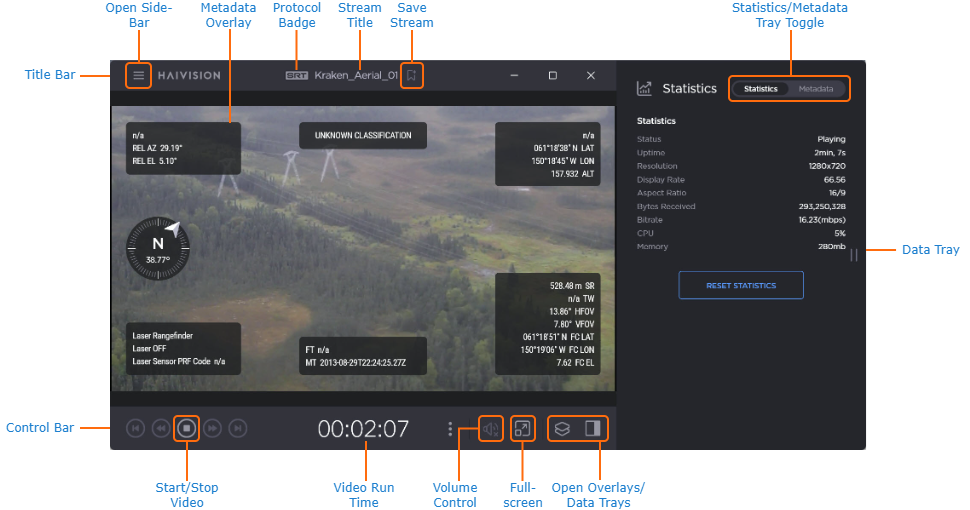
From the Title Bar:
Click
 to open the Side Bar.
Click
 next to the stream title to open the Program and Action dropdown menu.
From here, you can:
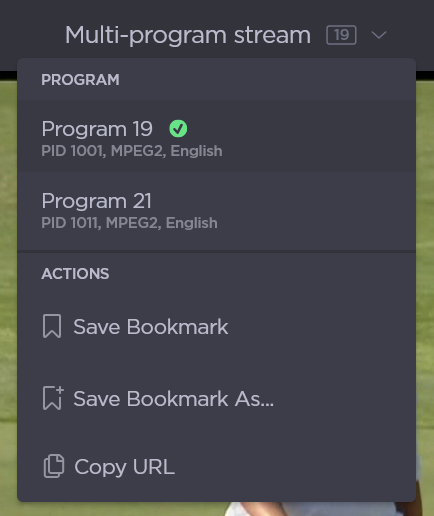
Select the the media program for the stream (if multiple are programs available),
Click
 Save Bookmark or
 Save Bookmark As to save your stream,
Click
 Copy URL to copy the stream link.
 Hover over available programs to access the audio and information options.

Click
 to open the Audio Tracks list and select the desired audio.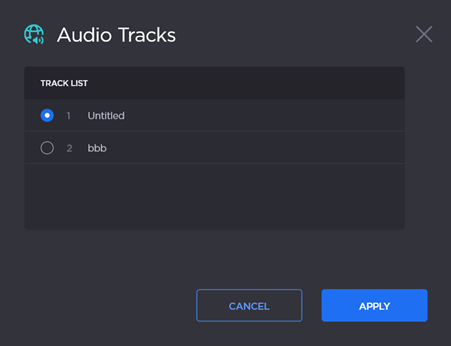
Click
 to open the Program Info. Click Copy to copy the information text.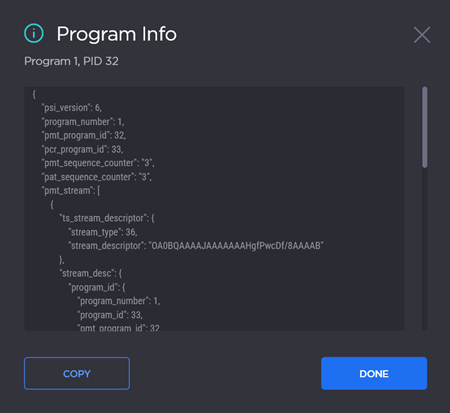
View the stream title, including protocol badges.

Tip
For bookmarked streams, the title will be the given stream name.
For streams that have not been bookmarked, the title will show the stream's Protocol, Address, and Port number.
Use the Window Controls to minimize, maximize, or close the player window.
Click and hold any empty space on the title bar to drag the player window.
Tip
The Side Bar must be closed in order to move the player window.
To control the stream-pay:
Click the Play/Stop button
 /
/ to start or stop the video stream.
Tip
You can also play or stop the video using the spacebar on your keyboard.
Track the Video Up-Time on the player.
Click the Snapshot icon
 to save an image of the running video feed.
Tip
By default, snapshots save to your downloads using the stream URL, or name (when configured) as part of the snapshot filenames. From the player settings, snapshots can be configured to include Metadata, Statistics, or Overlays. SeePlay ISR Settings for details.
For streams with multiple audio channels, click the Audio Tracks icon
 to select the desired audio track. When Disable Audio is enabled in thePlay ISR Settings, audio track selection will be disabled.

Note
Audio streams with ISO 639-2 language codes will be identified as their respective languages (e.g., eng appears as English in the audio track options).
When possible the player defaults to using the same language as specified on the host system running Play ISR.
Adjust the Volume level by clicking the Volume icon
 . If the stream has no audio, the volume icon will be disabled.
Note
When configuring audio from the back-end preferences, unsupported values (i.e. values higher than 100) will be automatically set to 100.
Click the Expand icon
 to enlarge the video to full screen, and the Collapse icon
 to exit full screen.
Tip
You can also exit full screen by pressing the Esc key, or the f key, on your keyboard.
To enable statistics and/or metadata overlays:
Click the Overlays icon
 to open the overlay options menu.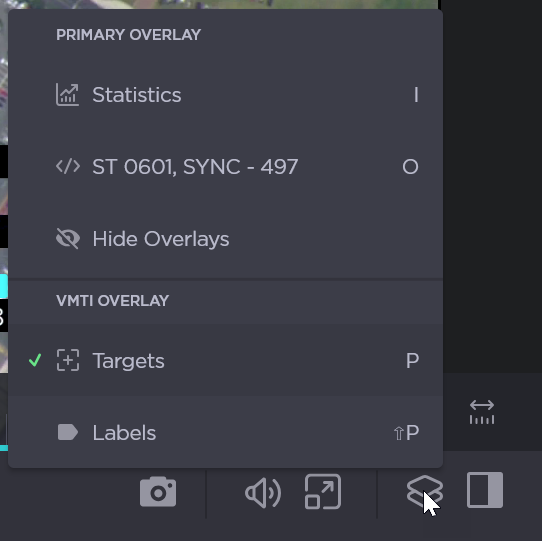
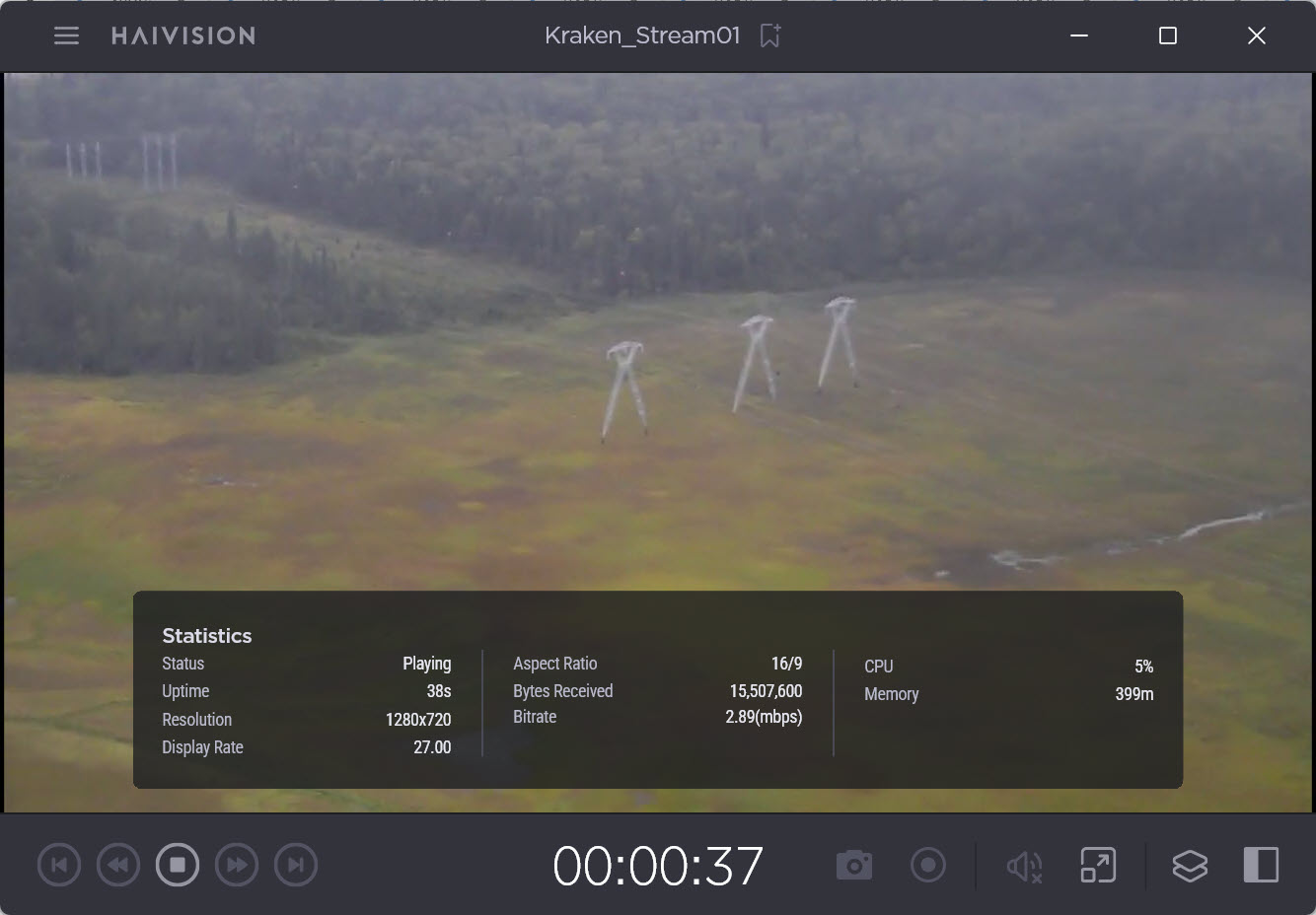
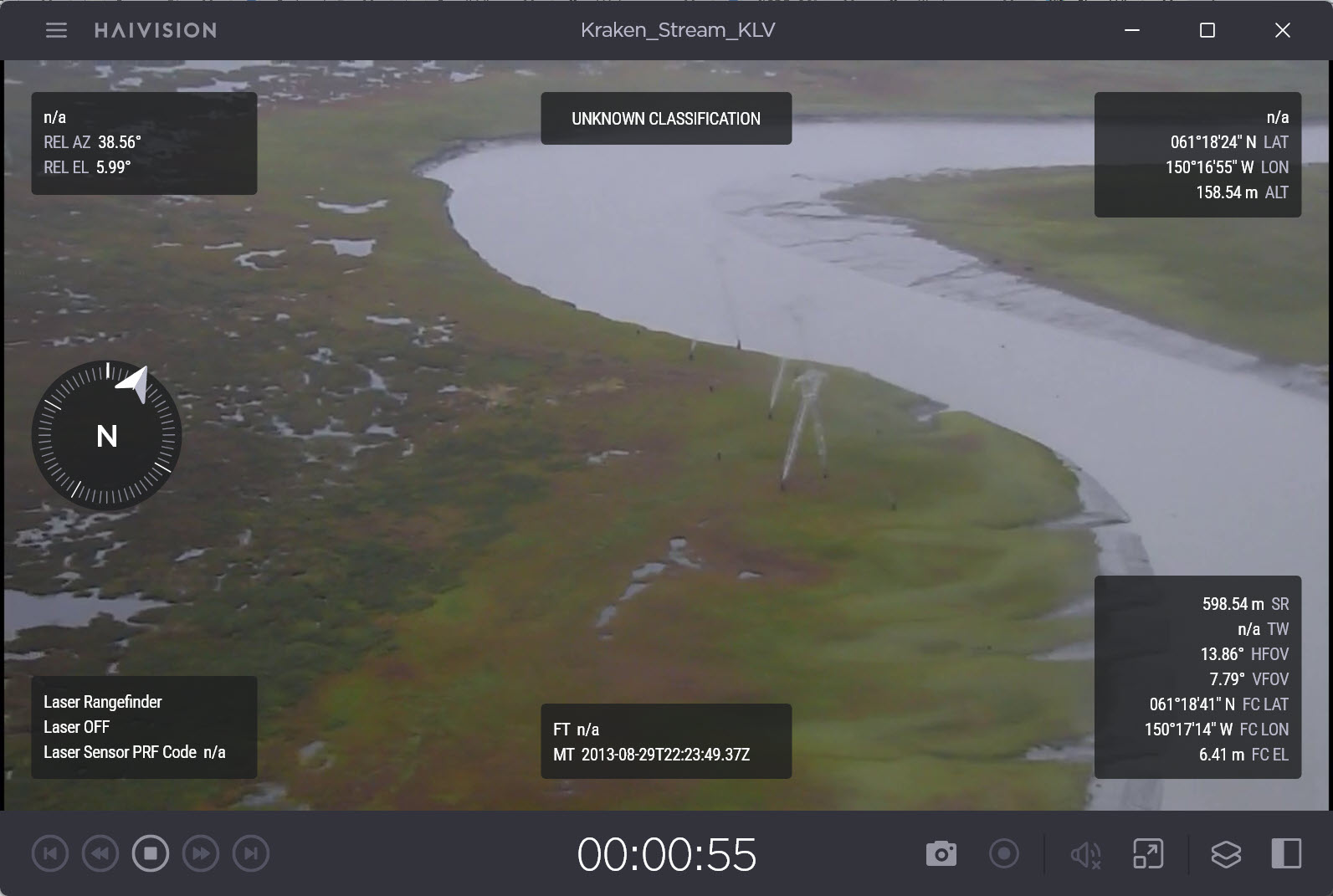
From this menu, select Metadata </> (when available, metadata overlays will be formatted according to MISB ST 1909 standards) or Statistics
 to display the corresponding information over the video feed.
Statistics overlay function example:
Metadata overlay function example:
Note
When available, Frame Center coordinates will be prioritized over Target coordinates in the metadata overlay.
To view the stream's statistics and/or metadata detail list:
Click the Tray icon
 to open/close a side tray displaying the Statistics or Metadata (when available).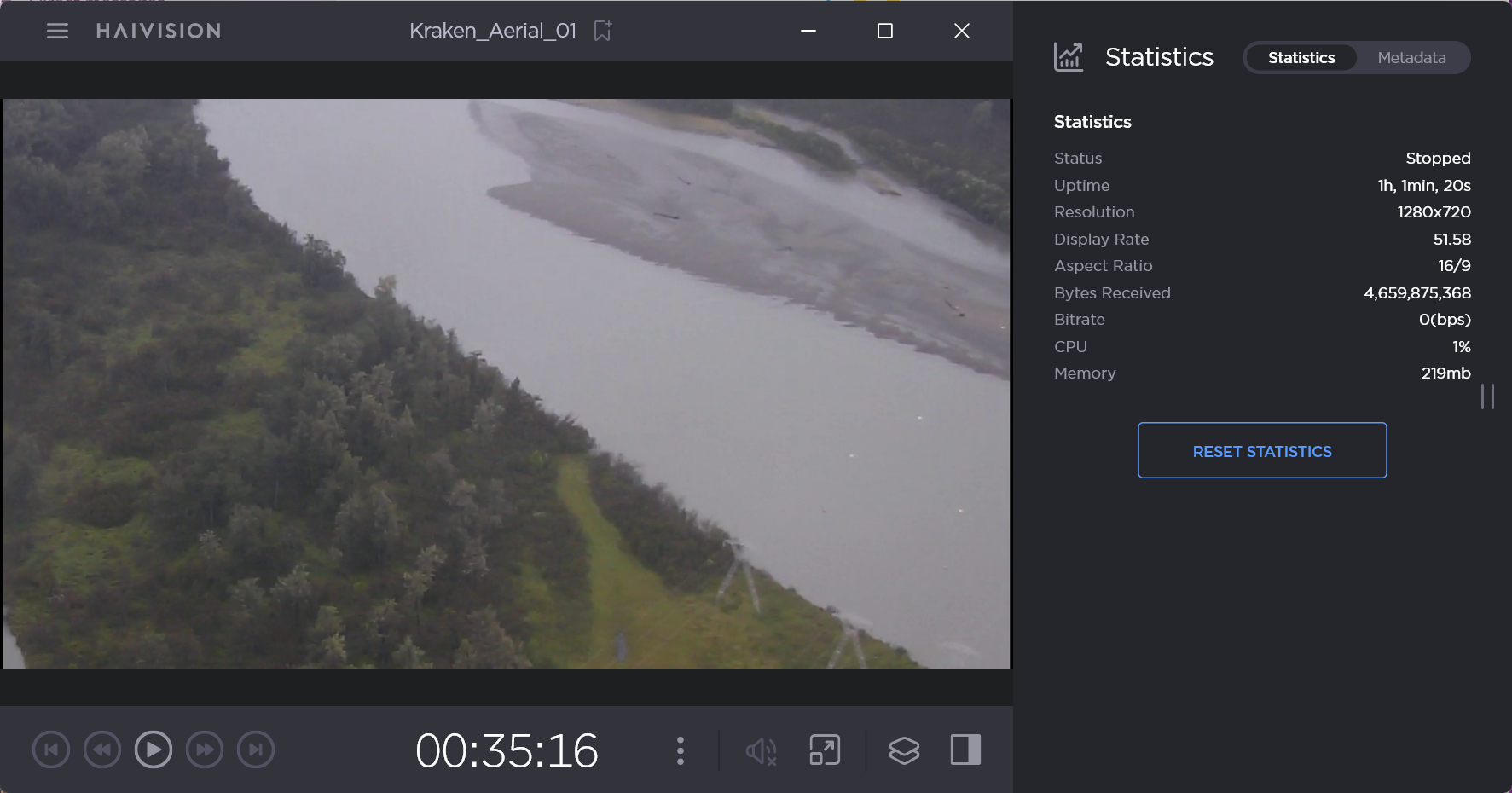
Use the Statistics / Metadata toggle to switch the information displayed on the tray.
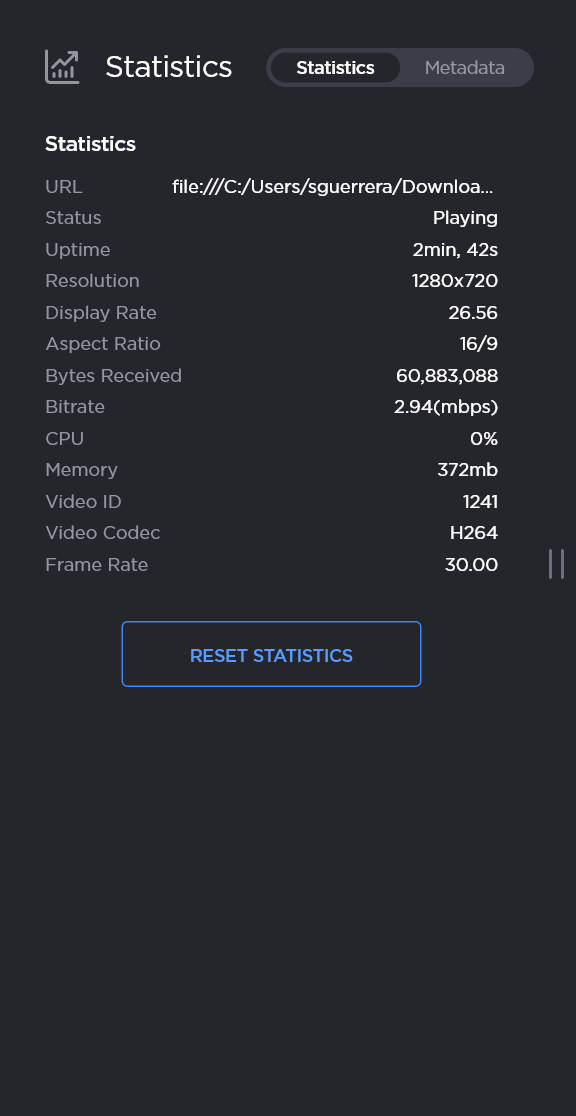
Note
For Transport Streams (SRT/UDP) the Play ISR statistics will provide the Program IDs for the Audio and Video essences.
For SRT Streams, the Statistics tray will show Delay and Bandwidth graphs.
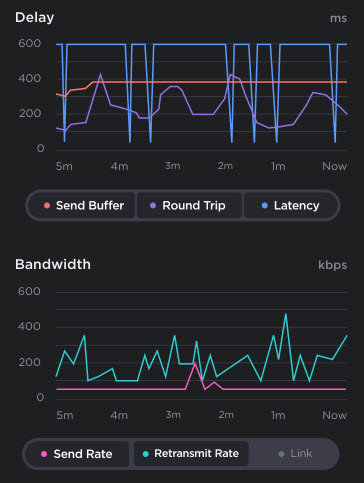
Scroll down the tray to reset the statistics by clicking the Reset Statistics button.
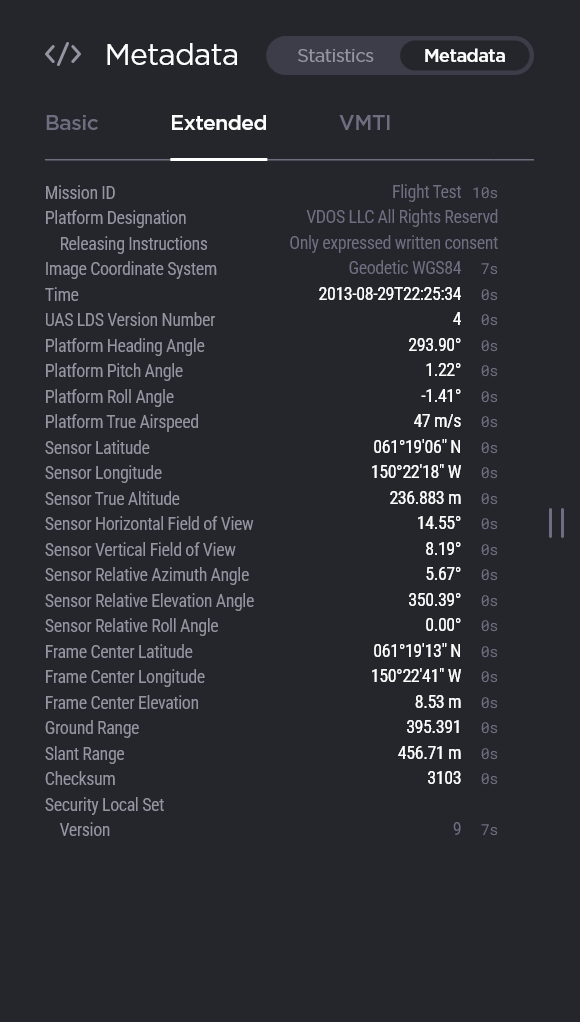
From the metadata tab, you can toggle between Basic, Extended, and VMTI (if available) metadata. For more information about VMTI, seeMonitoring VMTI Metadata.
In the Basic view, metadata is organized in groups according to MISB 1909, and classification metadata items are consistently displayed, even if they don't occur in every metadata packet.
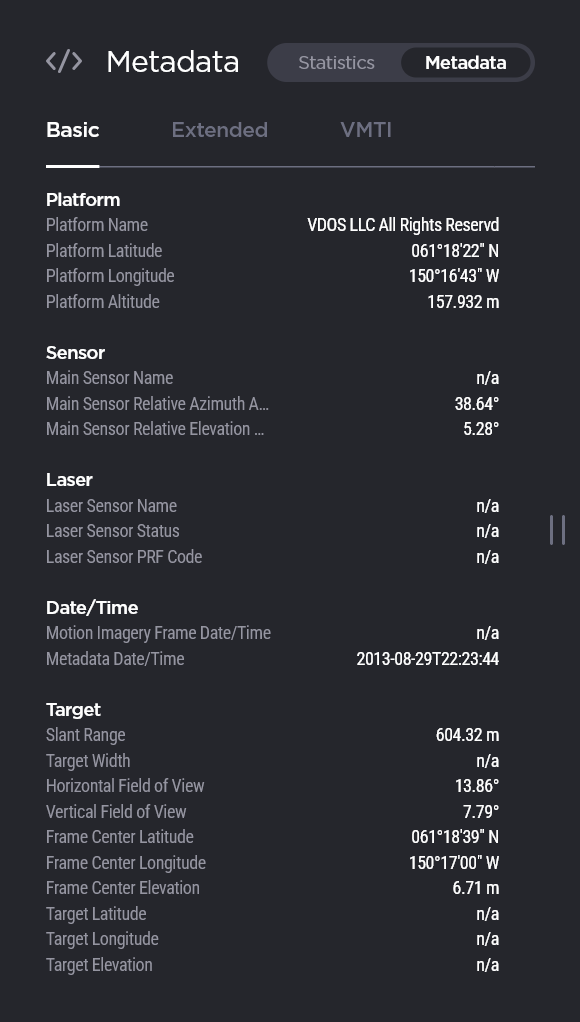
In the Extended view, metadata items that update frequently will change in real-time. Infrequent metadata values will persist, showing the most recent available data. Older values (i.e. data not received in the most recent packets) are distinguished by their faded appearance.
The time elapsed (in seconds) since receiving the data point is shown in the right-most column.